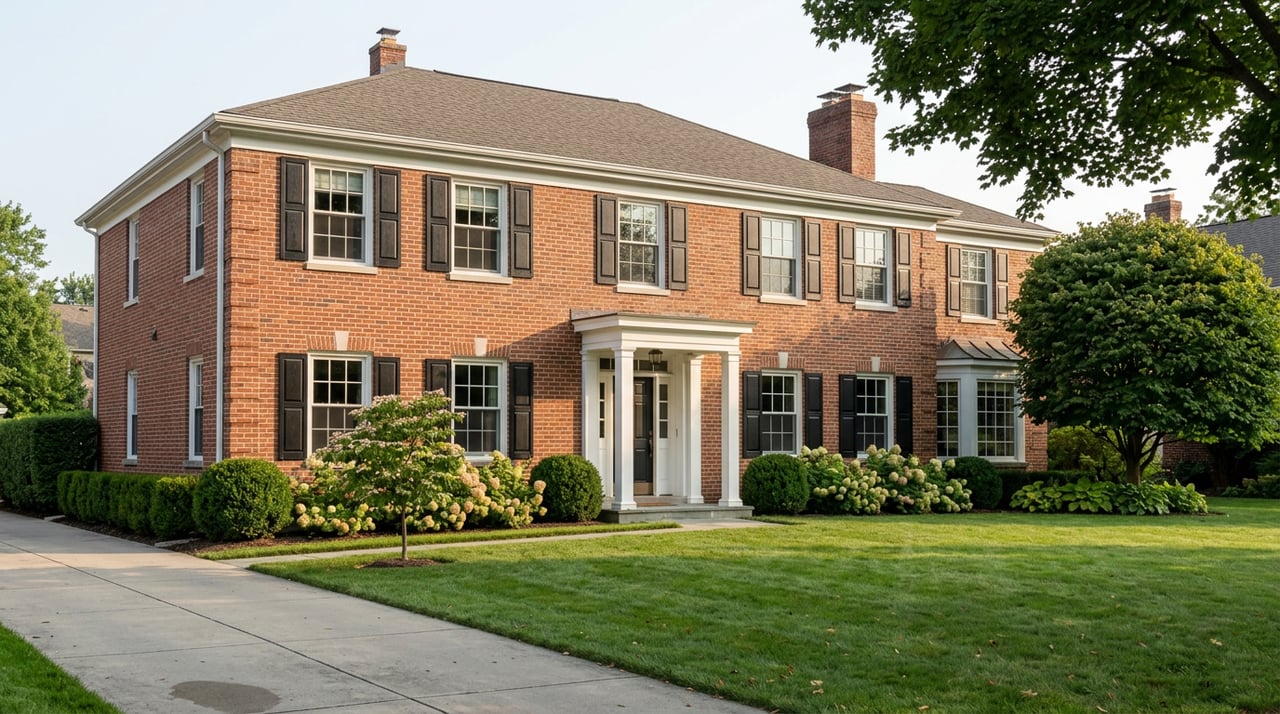
Walk the loop around Crestmoor Park this month and you will notice something that wasn't there last August: no orange fencing. For most of the past year, a chunk of the park's north side sat behind construction mesh while the city rebuilt the playground equipment and the walking paths around it. That fence is down now, and it matters more than a routine parks upgrade because of what sits on the other side of the street from it. Crestmoor's social life runs almost entirely through three institutions clustered within a few hundred feet of each other, and only one of them is actually public.
That's the thing about this neighborhood that doesn't show up in the drive-by version. The park itself belongs to the city. The swim and tennis club across from it does not. The garden beds inside the park are shaped by a volunteer group that predates most of the houses around it. And the only grocery stop within walking distance is a single, family-run market that has outlasted three decades of turnover everywhere else in Denver retail. Crestmoor didn't end up this way by accident. It was built with almost no commercial zoning and, in its Filing 2 section, no sidewalks at all, which means the park was always going to be the only place people actually run into each other. This summer is the first time since the fencing went up that every piece of that arrangement is open and running at the same time.
The Fence Comes Down
The playground that just reopened had been in place since 2001. Denver Parks and Recreation's second phase of improvements at Crestmoor Park replaced that equipment along with the deteriorating walk on the park's north side, at a project cost of $1.8 million funded through the RISE Denver Bond, the department's Legacy Fund, and City Wide Accessibility Capital Funds. Construction began in the summer of 2025 and wrapped this summer, which lines up with what residents actually experienced: a full year where the north end of the park was a work zone instead of a place to bring a toddler.
The redesign wasn't handed down from downtown without input. More than 400 people responded to an early community survey on what the rebuilt playground and paths should include, and the city held an in-person open house at George Washington High School to walk residents through the results before construction started. That's a meaningful number for a neighborhood this size. It means the equipment now on the ground reflects what people who actually live around the park asked for, not a generic parks department template.
If you haven't been back since the fence came down, the practical difference is a rebuilt playground and improved walking paths, with drainage and accessibility work addressed as part of the same phase. For a park that functions as Crestmoor's only real public gathering space, a full year of construction fencing was a bigger disruption to daily routine than it would be in a neighborhood with a dozen other options nearby.
The Club Across the Street Never Closed
While the public side of Crestmoor Park was fenced off, the private side kept running exactly as it always has. The Crestmoor Swimming and Tennis Club sits directly across from the park and operates on a membership structure that's unusual even by the standards of Denver's private clubs. Total membership is capped at 350 families, and new admissions only happen when an existing family leaves, a strict one in, one out system. Priority goes first to reinstatements and children of current members, then to residents who own homes in Crestmoor's original Filings I and II. Anyone applying from outside those categories needs both a primary and a secondary sponsor just to be considered.
That structure means the club isn't really a pool you join the way you'd join a gym. Membership follows a waitlist, with priority first for reinstatements and members’ children, then for residents in the two oldest sections of the neighborhood. For families who've been counting on a summer membership, understanding where you fall in that priority order matters more than knowing the dues.
Here's how the two halves of Crestmoor's summer infrastructure actually compare:
| Crestmoor Park (public) | Crestmoor Swimming & Tennis Club (private) | |
|---|---|---|
| Ownership | City of Denver | Member-owned association |
| 2025-2026 investment | $1.8 million playground and walk rebuild | Ongoing member dues, no public funding |
| Access | Open to anyone | Capped at 350 families, one in one out |
| Priority | None, first come first served | Reinstatements, members' children, then Filing I & II owners |
The park received a public infrastructure upgrade this year, while the club continued operating under its existing membership structure.
Who Actually Shapes the Park You're Walking Through
There's a third layer to this that's easy to miss because it doesn't show up on any city budget line. The flower beds and landscaped sections inside Crestmoor Park aren't maintained by Denver Parks and Recreation crews alone. The Crestmoor Park Garden Club, a women's social group founded in 1950, has spent more than seven decades focused on horticulture and floral design specifically to beautify the park. That's a volunteer body making aesthetic decisions about a public space for longer than most of the homes surrounding it have existed.
So when the $1.8 million rebuild wrapped this summer, it wrapped into a park where the hardscape is now city-funded and current, but the plantings around it are still shaped by the same volunteer group that's been doing that work since Truman was in office. It's a strange split of responsibility, and it's exactly the kind of local detail that explains why the park looks the way it does instead of like a standard municipal green space.
One Block, One Market, Forty Years
Step outside the park and the commercial options thin out fast, which is the point. Crestmoor was designed with almost no retail inside its boundaries. The one exception is a small strip at the corner of Holly and Cedar, anchored for nearly 40 years by Pete's Fruits and Vegetables Market, run by Pete Moutzouris. The market carries fresh produce alongside Greek specialties, kosher items, and Italian imports. Basil Doc's pizza and a small cheese shop round out the same corner.
That's it. That's the whole commercial footprint most residents walk to. It's a sharp contrast to neighborhoods a mile in any direction, where a resident might have a dozen lunch options within a few blocks. Here, the absence of options is what pushes people toward the park and the club instead, and it's part of why those two institutions carry so much more social weight than they would somewhere with more retail competing for attention.
How the Pieces Fit This Summer
Put it together and the picture is this: a public park just came out of a year-long construction disruption with a genuinely new playground and better walking paths, a private club next door continued operating under its membership structure, a volunteer garden club has quietly kept the plantings looking the way they've looked for 75 years, and a single family-run market keeps holding down the neighborhood's only retail corner. None of those four things moves in sync with the others. This summer, for the first time since the fencing went up, all four happen to be running at once.
A few ways to actually feel the difference this season:
- Walk the north loop of the park in the early evening, when the new playground and path improvements are easiest to see against the older, unchanged sections to the south.
- If you're weighing a swim club application, ask specifically where you'd land in the priority order before assuming dues are the only barrier.
- Take the bike loop along Cedar Avenue and Monaco Parkway, the two routes locals actually use for a scenic ride, and notice how quickly the residential quiet gives way to Holly Street's single commercial block.
- Stop into Pete's on a weekend morning when the produce turnover is highest and the shop is busiest with regulars who've been coming for years.
None of this requires a real estate transaction to appreciate. It requires knowing that Crestmoor's park is public, its club is not, its garden beds are curated by volunteers, and its entire commercial life fits on one corner. That's the neighborhood working the way it was built to work, just with a fresh coat of pavement this year.
If you're weighing a move into Crestmoor Park, or you already live here and want a clearer read on what a home near the park or the club is actually worth this year, Jan Nelsen can walk you through it. Get Your Home Value.